In recent years, the metal furniture industry has undergone a significant transformation. At the heart of this shift lies laser cutting in metal furniture. With rising demands for customization, efficiency, and sustainability, more manufacturers are recognizing that laser cutting in metal furniture is no longer optional—it’s a strategic move.
Why Is Laser Cutting Becoming the New Standard?
Traditional methods like stamping and mechanical cutting once dominated furniture manufacturing but now struggle to meet modern demands for flexibility and precision. In contrast, laser cutting offers clear advantages in metal furniture production:
High precision with clean edges and minimal finishing Fast processing speeds for various production scales Improved material utilization, reducing waste Greater design flexibility for complex patterns and modular structures
As a result, more B2B manufacturers are adopting laser cutting. In addition, its high repeatability ensures consistent quality in mass production. With software-driven control, each cut can be precisely replicated, saving time and reducing human error.
Key Trends Shaping 2025
Automation Becomes the Norm
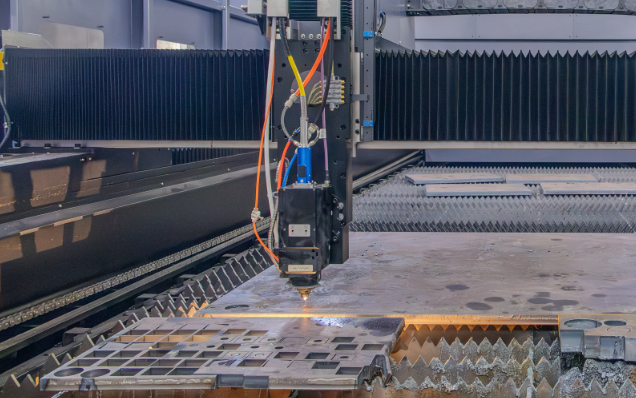
Modern laser cutting in metal furniture systems integrate seamlessly with CAD/CAM and ERP software. When combined with robotics, they enable fully automated workflows—from design to cut. This shift helps reduce manual labor and boosts operational efficiency.
Rise of Mass Customization
Clients want more than standard solutions. Office spaces, hotels, and retail interiors require fast and flexible customization. This makes small-batch agile production the new normal—and laser cutting in metal furniture makes that possible. Manufacturers can now respond to market changes and customer feedback almost instantly.
Sustainability Drives Buying Decisions
Laser cutting in metal furniture consumes less energy and produces less scrap. With carbon neutrality becoming a global goal, its eco-efficiency is now a major selling point. Many manufacturers are using it as part of their ESG (Environmental, Social, Governance) initiatives.
Integrated Multi-Process Solutions
Manufacturers are combining laser cutting in metal furniture with bending, welding, and coating in a single line. This saves space and significantly improves turnaround time. A streamlined process not only reduces operational costs but also shortens delivery cycles.
Data-Driven Optimization
As Industry 4.0 advances, laser cutting in metal furniture benefits from smart data analytics. Real-time monitoring allows companies to detect inefficiencies, reduce downtimes, and ensure machine longevity. Predictive maintenance is becoming more widespread in factories.
What B2B Clients Truly Care About
For OEMs and contract manufacturers, it boils down to three things: efficiency, cost, and flexibility. Fortunately, laser cutting in metal furniture addresses them all:
Suitable for a wide range of metals: stainless steel, carbon steel, aluminum
Rapid shift from prototyping to full production
Precise cuts that improve assembly and structural stability
No need for molds—cutting both time and investment
Easy integration with existing manufacturing lines
This is why more businesses are upgrading their production lines with laser cutting in metal furniture technology.
Practical Applications Across Metal Furniture
Laser cutting in metal furniture is transforming various product segments
Office desk frames and partitions: strong, sleek, and modular
Warehouse racks and industrial tables: high-load capacity with consistent quality
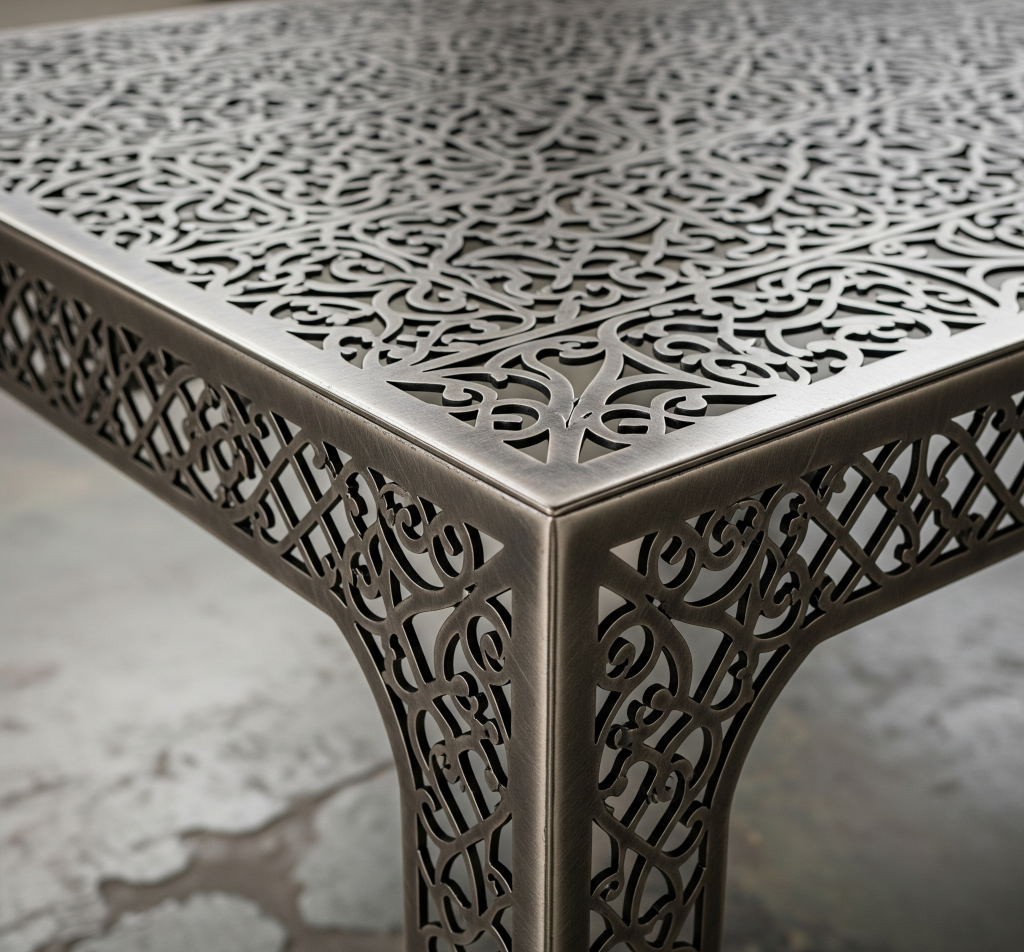
Decorative features in commercial spaces: detailed logos and artistic patterns
Outdoor furniture components: weather-resistant and durable
Customized shelving systems for retail or exhibitions
Whether for functional frames or custom details, laser cutting in metal furniture plays a crucial role at every stage.
Additionally, the ability to cut intricate patterns allows for more creative freedom in architectural metal furniture. Interior designers and architects are increasingly seeking out manufacturers that offer advanced laser-cut capabilities.
What’s Next for Laser Cutting in Furniture?
Looking forward, innovation will further expand the role of laser cutting in metal furniture:
3D laser heads for cutting curved or irregular surfaces
Fully automated pipe-cutting lines for high-speed processing
Standardized global cutting protocols to enhance multinational collaboration
Laser-marking features embedded in cutting stations for real-time traceability
These developments will elevate both product quality and market competitiveness through laser cutting in metal furniture.
Conclusion: Seize the Moment — Upgrade with Laser Technology
Today, this high-precision technology is more than just a tool — it’s a driving force behind innovation in metal furniture production. For companies focused on speed, accuracy, and flexibility, it enables smarter, more efficient workflows.
At Glory Laser, we provide customized metal processing solutions tailored to the needs of furniture manufacturers. With deep industry experience, dependable systems, and expert support, we've helped many clients successfully upgrade their operations.
Whether you're just starting to explore advanced fabrication tools or looking to improve your current process, Glory Laser is ready to support you every step of the way.
In this era of smart manufacturing, choosing the right technology — and the right partner — can make all the difference. Now is the time to move forward and lead with innovation at the heart of your strategy.